•
PROCESS
BY AEMON BLACKWOOD
Every thriller, at its core, is a promise. A promise that the world you're about to enter holds secrets worth uncovering, that the danger is real, and that the resolution — if it comes at all — will leave you breathless. But how do writers construct that promise, and more importantly, how do they keep it?
Over the past two decades, I've studied and deconstructed hundreds of thrillers — from the labyrinthine plots of John le Carré to the white-knuckle pacing of Gillian Flynn. What I've found is that beneath every great thriller lies a surprisingly consistent architecture, a skeleton that supports even the most wild and unpredictable narratives.
The Hook: Your First Thirty Seconds
The opening of a thriller is not a gentle invitation. It's an ambush. The reader must feel, within the first page — ideally the first paragraph — that something is terribly wrong. Not necessarily violent or loud, but displaced. A detail that doesn't belong. A silence where there should be sound.
In my latest novel, The Midnight Cipher, the opening scene takes place in a quiet library. Nothing happens. A man reads a newspaper. But the newspaper is from three years in the future. That single detail — understated, almost easy to miss — sets the entire mechanism of the story into motion.
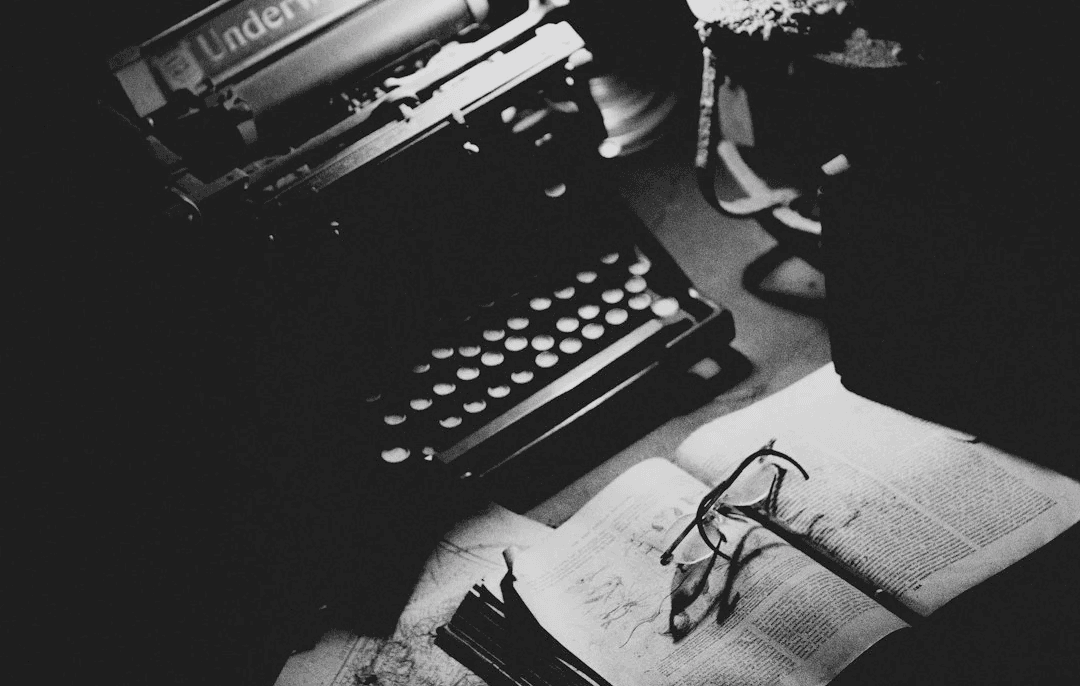
THE TOOLS OF THE TRADE — EVERY STORY BEGINS WITH A SINGLE KEYSTROKE
Tension: The Art of Withholding
Tension is not about what happens. It's about what might happen. The most effective thrillers understand that the anticipation of violence is more terrifying than violence itself. Alfred Hitchcock knew this — the bomb under the table, ticking while two men have lunch, unaware.
I think of tension as a rubber band. You stretch it slowly, deliberately. The reader feels the strain. They know it will snap. The question is only when, and in which direction. The mistake many writers make is snapping the band too soon, releasing the tension before it's truly unbearable.
"The most dangerous moment in any story is not the explosion — it's the silence that precedes it. That's where the real terror lives."
— AEMON BLACKWOOD
Character Under Pressure
A thriller without compelling characters is just a series of events. The structural elements — the ticking clock, the hidden antagonist, the escalating stakes — all exist to serve one purpose: to reveal who your characters truly are when everything they value is under threat.
I've found that the most memorable thriller protagonists share a common trait: they are fundamentally broken in a way that makes them uniquely suited to face the specific threat of the story. Elias Thorne, my detective in The Midnight Cipher, suffers from prosopagnosia — face blindness. In a story about a killer who hides in plain sight, this isn't just a character quirk. It's the engine of the entire plot.

RESEARCH IS THE FOUNDATION — EVERY DETAIL MUST FEEL INEVITABLE
The Twist: Earned, Not Imposed
The twist is perhaps the most misunderstood element of the thriller. Too many writers treat it as a magic trick — a gotcha moment designed to shock. But the best twists don't come from nowhere. They've been hiding in plain sight, woven into the fabric of the narrative so carefully that, upon re-reading, you wonder how you ever missed them.
A good twist recontextualizes everything that came before. It doesn't invalidate the reader's experience — it deepens it. When I'm constructing a twist, I work backwards. I write the revelation first, then I go back through every chapter and plant the seeds. Each seed must feel natural in its original context but unmistakable in retrospect.
"A thriller doesn't end when you close the book. It ends when you stop looking over your shoulder."
— AEMON BLACKWOOD
The Resolution: Silence After the Storm
The ending of a thriller must feel both inevitable and surprising. The reader should close the book and think, "Of course. How could it have ended any other way?" — while simultaneously feeling the ground shift beneath them.
I prefer endings that are quiet. After hundreds of pages of escalating tension, the most powerful thing you can do is slow down. Let the dust settle. Show the aftermath. The scars. The empty rooms. Because a thriller is ultimately not about the crime or the chase — it's about the cost. What was lost. What can never be recovered.
The anatomy of a thriller, then, is deceptively simple: hook, tension, character, twist, resolution. Five bones. But the art is in the connective tissue — the atmosphere, the voice, the rhythm of sentences. That's where the real magic happens. And that, I suspect, is what keeps readers turning pages late into the night.